Friday, July 12, 2024

10 Essential Japanese Proverbs to Boost Your Language Skills and Cultural Understanding

Japanese Proverbs for Language Learners

Are you looking to take your Japanese language skills to the next level? Dive into the world of Japanese proverbs (諺 - kotowaza) to enhance your vocabulary, cultural knowledge, and conversational abilities. These time-honored sayings offer invaluable insights into Japanese culture and wisdom. 

Let's explore 10 must-know proverbs that will impress native speakers and deepen your appreciation of the Japanese language.

1. 猿も木から落ちる (Saru mo ki kara ochiru)
Meaning: Even monkeys fall from trees 
English equivalent: Everyone makes mistakes

2. 七転び八起き (Nanakorobi yaoki) 
Meaning: Fall seven times, stand up eight 
English equivalent: Never give up

3. 出る杭は打たれる (Deru kui wa utareru) 
Meaning: The nail that sticks out gets hammered down 
Cultural insight: Conformity in Japanese society

4. 石の上にも三年 (Ishi no ue nimo sannen) 
Meaning: Three years on a rock 
English equivalent: Perseverance pays off

5. 虎穴に入らずんば虎子を得ず (Koketsu ni irazunba koji wo ezu) 
Meaning: If you don't enter the tiger's cave, you won't catch its cub 
English equivalent: Nothing ventured, nothing gained

6. 蓼食う虫も好き好き (Tade kuu mushi mo sukizuki) Meaning: There are even bugs that eat knotweed English equivalent: There's no accounting for taste

7. 井の中の蛙大海を知らず (I no naka no kawazu taikai wo shirazu) 
Meaning: A frog in a well does not know the great ocean 
English equivalent: Broaden your horizons

8. 覆水盆に返らず (Fukusui bon ni kaerazu) 
Meaning: Spilt water will not return to the tray English equivalent: What's done is done

9. 三人寄れば文殊の知恵 (Sannin yoreba Monju no chie) 
Meaning: Three people together have the wisdom of Buddha 
English equivalent: Two heads are better than one

10. 塵も積もれば山となる (Chiri mo tsumoreba yama to naru) 
Meaning: Even dust, when piled up, can become a mountain 
English equivalent: Little by little does the trick

Learning these proverbs will not only expand your Japanese vocabulary but also provide you with culturally rich expressions to use in conversations. Practice using them in context to sound more natural and impress native speakers.

Which of these proverbs resonates with you the most? Share your thoughts in the comments below!

Want to learn more? Check out our other articles.

Keywords: Japanese proverbs, kotowaza, language learning, Japanese culture, vocabulary, sayings, cultural understanding, Japanese wisdom, language skills

Sunday, November 26, 2023

JLPT N5 One-month review schedule

Is it possible to pass the JLPT N5 in 1 month? Certainly, if you focus on it entirely. The recommended time to pass N5 is 150-180 hours of study.

Remember that the JLPT N5 is a beginner-level exam, and the focus is on basic language skills. Tailor your study plan to your strengths and weaknesses, and don't forget to include a variety of study activities, such as reading, listening, speaking, and writing, to ensure a well-rounded preparation.

Here's a sample one-month review schedule to consolidate your preparation for the JLPT N5. This assumes that you've already covered the required materials and are now in the final stages of refining your knowledge and skills.

Week 1: Grammar and Vocabulary Refresher

Day 1-3: Grammar Focus

  • Review all N5 grammar points.
  • Identify weak areas and focus on those.
  • Practice constructing sentences and short paragraphs using the grammar points.

Day 4-7: Vocabulary Mastery

  • Review all N5 vocabulary.
  • Create flashcards for any words you find challenging. Use Anki.
  • Use vocabulary in sentences to reinforce understanding. - Again, Use Anki prepared decks.

Week 2: Reading and Listening Intensive

Day 8-10: Reading Comprehension

  • Practice reading N5-level passages.
  • Answer comprehension questions.
  • Identify and review any unfamiliar kanji. Use Anki for the Kanji.

Day 11-14: Listening Skills Enhancement

  • Listen to a variety of N5-level audio materials.
  • Practice listening comprehension exercises.
  • Use mock JLPT N5 listening tests.

Week 3: Mock Exams and Weak Area Focus

Day 15-17: Mock Exam 1

  • Take a full-length JLPT N5 practice test.
  • Analyze your performance and identify weak areas.
  • Review and reinforce those weak areas.

Day 18-20: Mock Exam 2

  • Take another full-length JLPT N5 practice test.
  • Compare your scores and note any improvements or persistent challenges.
  • Deepen your understanding of the identified weak points.

Week 4: Final Review and Test Strategies

Day 21-24: Comprehensive Review

  • Review all areas of the exam—grammar, vocabulary, reading, and listening.
  • Simulate test conditions for specific sections.
  • Work on time management strategies.

Day 25-27: Test Strategy Refinement

  • Focus on strategies for each section of the test.
  • Fine-tune your approach to answering questions efficiently.
  • Review common mistakes and how to avoid them.

Day 28-30: Relaxation and Confidence Building

  • Take it easy the day before the test.
  • Engage in light review if needed, but prioritize relaxation.
  • Boost your confidence with positive affirmations and visualization.

Test Day:

  • Ensure you have all necessary materials ready.
  • Stay calm and focused during the test.
  • Trust in your preparation and give your best effort.

Remember to adapt this schedule based on your individual needs and progress. The goal is to build confidence, reinforce your knowledge, and refine your test-taking strategies in the weeks leading up to the JLPT N5 exam. Good luck!

Tuesday, November 7, 2023

From Yokohama to Hiroshima: A Guide to Japanese Auto Tours Car Tours Automobile Enthusiast


Car plant tours in Japan offer an opportunity to witness the meticulous craftsmanship, cutting-edge technology, and efficient manufacturing processes that have made Japanese automotive manufacturers world-renowned. While availability and scheduling may vary, here are some car plant tours you can consider:

  1. Toyota Factory Tours ---> still suspended from 2021, as of November 2023

    https://www.toyota.co.jp/en/about_toyota/facility/toyota_kaikan/index.html

    • Toyota City, Aichi Prefecture: Toyota offers tours of several of its production facilities, including the Toyota Motomachi Plant, Tsutsumi Plant, and Tahara Plant.
    • Lexus LFA Works: This specialized plant in Aichi Prefecture is dedicated to the production of the high-performance Lexus LFA supercar.
  2. Nissan Factory Tours: -> newly re-opened as of Spring 2023! 

    https://www.nissan-global.com/EN/PLANT/OPPAMA/

    • Yokohama, Kanagawa Prefecture: Nissan's Yokohama Plant, which includes the Oppama Plant, offers guided tours of their facilities.
     
    • From the website: 
    • REQUESTS
      1) Inquiries regarding plant tours
      Oppama Plant Guest Hall, Nissan Motor Co., Ltd.
      +81 (0)46-867-5013

      2) Inquiries regarding the plant
      Oppama Plant, Nissan Motor Co., Ltd.
      Human Resources and Administration Department
      General Affairs Section
      +81 (0)46-867-5000

      Now we are having one cold day after another, and can't wait for warm spring.
      The spring vacation season in 2023, we are conducting Plant Tours for the general public, too and it is the first time in about 3 years.
      As we are preparing Tours both “Tours for Adult” and “Tours for Children”, Please come and take our tours with your family members and your friends.
      We are looking forwards to seeing you then!

      The reservation will be accepted from 8:00 in the morning on the same day 3 months ago.

  3. Honda Factory Tours:

    • Saitama Prefecture: Honda offers tours of their Sayama Plant where they manufacture various car models.
    • Tochigi Prefecture: Visit the Honda Technical Research Institute in Tochigi to see research and development activities.
  4. Subaru Factory Tours:

    • Gunma Prefecture: Subaru offers factory tours at their Gunma Main Plant and Yajima Plant.
  5. Mazda Factory Tours: Japanese language only at the moment.

    Museum: https://www.mazda.com/en/about/museum/ 

    Booking page: https://www2.mazda.com/ja/about/museum/reservations/new/input1.html  

    • Hiroshima: The Mazda Museum in Hiroshima offers a guided tour that includes a visit to the Ujina Plant.
  6. Mitsubishi Factory Tours:

    • Okazaki, Aichi Prefecture: The Mitsubishi Motors Okazaki Plant may offer guided tours, which can provide insights into their manufacturing processes.
  7. Suzuki Factory and Museum Tours:

    Museum tour requires pre-registration: https://suzuki-rekishikan.jp/ 

    • Hamamatsu, Shizuoka Prefecture: Suzuki offers tours at the Suzuki Hamamatsu Plant where they produce vehicles and engines.
  8. Daihatsu Factory Tours:

    • Osaka: Daihatsu's Osaka Plant may offer factory tours, providing insights into their compact car production.
  9. Fuso Factory Tours:

    • Kawasaki, Kanagawa Prefecture: Fuso, a subsidiary of Daimler AG, offers tours of their Kawasaki Plant, which produces commercial vehicles.
  10. Subaru Tecnica International (STI) Factory Tours:

    • Mitaka, Tokyo: STI is the motorsports and performance division of Subaru, and they sometimes offer guided tours of their facility in Mitaka.

It's important to note that many of these tours require advance reservations, and some may have restrictions on the number of visitors or age limits. Additionally, availability and tour details may change over time, so it's advisable to check with the respective manufacturers' websites or contact them directly for the most up-to-date information and to make tour reservations.

Sunday, September 19, 2021

7 Kanji Study Methods

There are many ways of studying Kanji, or anything, for that matter. Some are fun, and some are, well, less fun.  

 Some people don't bother learning Kanji by itself. Learning vocabulary will expose the learner to Kanji. However, at the beginning, you do need to study Kanji.

Each person has a different learning style - what is yours - are you a visual / auditory or kinesthetic learner? -> https://www.learningstylequiz.com/. To get the most of learning, it would be best to match this.

Here are 7 ways of learning Kanji.

1) Calligraphy - By drawing the Kanji  while learning

     It is rare that you will have to write Kanji. The most you will do is to read Kanji / type on a computer. 

If you just want to get a handle of the stroke order and the feel of the Kanji, or if it helps you to remember, 

or you just like writing Kanji with a pen,

or even a brush,      

you you can try one of the Kanji paper worksheets that takes you back to pre-school days. 

http://Renshuu.org has a worksheet maker of Kanji you want to print out (where you can write the Kanji again and again.. and again.. and again.. OK.. and again.. )

     If doing the JLPT, use the unofficial JLPT lists to know what to study:

https://www.mlcjapanese.co.jp/basic_kanji_120.html    


2) Heisig's Remembering the Kanji or Kondansha method

     The author, James Heisig essentially assigned a meaning per "piece" of each Kanji and he made stories about them which you will have to stick to since the stories just build and build as the characters become more dense.  There are pros and cons to using his method.

     https://nirc.nanzan-u.ac.jp/en/files/2012/12/RK-1-6th-edition-sample.pdf

    Kodansha method has a similar approach and is highly rated due to the focus on building blocks, important Kanji, and the focus on distinguishing similar Kanji - learn 2300 Kanji:

      https://amzn.to/3CppqO1   


3) Kanji stories (your own stories method)

     Similar to Heisig but using your own "stories" to remember stuff:

     https://kanjiclinic.com/kanjibreakthrough.pdf


4) Spaced Repetition System / SRS

    These are "optimized" flashcards - the system shows more of the stuff you get wrong, but stuff you get right gets shown at the right time (just right before you begin forgetting). You can use your smartphone anywhere while waiting in line, etc.

    Tools:

    http://www.renshuu.org is a good drilling tool -> for everything Japanese - Kanji, vocabulary, listening, grammar, etc.

    Anki - there's a computer-based app and Android app -> then load the lists from the free content repository.  https://apps.ankiweb.net/


5) Typing up lists of similar Kanji.

     Many Kanji look alike. OK, a lot of Kanji look alike. Or maybe everything looks alike in the beginning.

     Examples:

日 - day / sun

白い – white 

- hundred


目 -
eye

自 - self

貝 - shell

     In my case, if I'm still confused after all the spaced repetition and stories, I make lists of the confusing similar Kanji and their meanings. Seeing the similar Kanji side by side makes their differences more evident and memorable.

     I make typewritten cheat sheets / memory aids and post them on the wall where I can see them everyday. In the bedroom you can see them at night and in the bathroom you can see the Kanji again in the morning. There's no end to Kanji nightmares. It's easy to setup Japanese typing on a computer, there are many guides online for Windows.


6) Study while relaxing

     No downtime here, we're still studying even when relaxing. 

     Games that are about learning Kanji:

     https://anime-manga.jp/en/ -> web game

     https://lrnj.com/ -> old school RPG game where you type the Kanji

     Or any Japanese game that lets you read Japanese.


7) Reading

     Read actual text / news / Japanese Wikipedia - NHK has a Japanese news for beginners.

     Yomichan Firefox or Chrome plugin makes reading Japanese much easier like a dictionary pop-up for any word on the page. It also integrates with Anki SRS, so you can save words you want to remember.

     https://addons.mozilla.org/en-US/firefox/addon/yomichan/

     After installing Yomichan, import the Japanese-English dictionary you'll download from the Yomichan dictionary page https://foosoft.net/projects/yomichan/#dictionaries    

Conclusion:

Each person will have different ways of studying that works for them, because, well as the yojijukugo* goes: 

"十人十色 jūnintoiro ( ten + nin person + to ten + iro color)", 

which means "to each their own; So many people, so many (colors / styles) minds, or also, in this case, learning styles."

And also, studying language is (usually) not a sprint (unless you're trying to cram for the JLPT in a month), it's (usually) a marathon. But aren't marathons also difficult? 

Maybe I should say studying a language is a walk (in the park), if we take it 

"一日一歩 ichinichiippo (ichi one + nichi day + ichi one + po step) -

one step each day, which would also be too slow in real life, but figuratively, it could be the way to go.


**Yojijukugo are 4-character phrases or proverbs or simply words.. see more of them here: https://en.wikipedia.org/wiki/Yojijukugo

Friday, January 22, 2021

Updated! 2021 Best JLPT Books for Level N2 and N3

The best way to study for the JLPT or any exam for that matter,
is to try to take mock tests, check your weak points, study, test again, repeat until your test scores break 80% and above consistently. 

My rule is that I should be getting 50% on mock test scores 6 months before the exam, and progressively improve on that. To do that, we can use books for learning the material and books specifically for testing grammar and reading. 


For the vocabulary and Kanji, I just use online flashcards. No need to buy Kanji books or vocabulary books in my opinion. But, for the grammar and reading, that's where the books really helped me. Links to the actual books included below.  


JLPT N2  

I took N2 twice, failed the first time.

The second time around, I had a better understanding of how to study and passed. 

Reading speed is essential.  Grammar patterns are essential. Listening is not that difficult, just get exposure. Vocabulary can be picked up from flashcards. Kanji is learned passively while learning vocabulary.

These resources helped me pass the 2nd time around...


1) Moshi to Taisaku N2 - I used this for N3, excellent resource. And used it again for N2, still excellent. Answer key has explanations.


2) Kanzen Master reading - for Reading, an absolute must! Must! Must! Answer the sample exams included with explanations for the answers. For N2, reading speed is essential so this is what I needed.


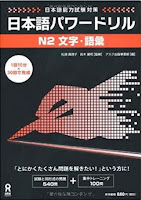
3) Power Drill Grammar - My favorite for grammar. 45 minutes per question set, not boring, learn to pace yourself perfectly!

You can take 1 Power Drill test a day and not get study fatigue. This is good for 0-3 months before the exam.

 
4) Mimi kara oboeru - book with audio, absolutely useful -> bombard yourself daily with the grammar patterns. I used the JLPT2 old version, still useful. The book contains additional example sentences not in the audio. Passive learning, just play the audio. If you want active learning, follow along with the text.


5) A dictionary of japanese grammar - very useful even after the JLPT, 3 books for lifetime Japanese learning. If something is not clear, it will usually be after you look it up in this excellent reference. Get the complete set -> basic, intermediate, advanced.


Not recommended: 

Sou Matome series (too easy, below actual exam difficulty) - I used these the first time and did not pass. :(


JLPT N3 

 
1) Kanzen master reading

The classic Kanzen master is an absolute lifesaver. Answer the mock reading exam at the end.


2) Mimi kara oboeru N3 grammar -

Listen and learn! It's very sticky. Text comes with additional sentence patterns. absolutely useful, also helps with listening. 

3) JLPT Try! N3

JLPT Try! is good for early on, around 3-6 months before the exam, for acquiring information. It covers listening, grammar, reading, vocabulary in one book. It's like an integrated all in one book. It's good but the exercises are too easy. I would still supplement it with a mock exam type of book. 

4) Power Drill grammar - 

My favorite for grammar. 45 minutes per question set, not boring, learn to pace yourself perfectly! You can take 1 test a day and not get study fatigue. This is good for 0-3 months before the exam. 

5) A dictionary of japanese grammar - very useful even after the JLPT, 3 books for lifetime Japanese learning. If something is not clear, it will usually be after you look it up in this excellent reference. Get the complete set -> basic, intermediate, advanced. 


Monday, April 20, 2020

Our Father Lord's Prayer and Other Rosary Prayers in Nihongo Japanese Language

Sign of Cross
Chichi to Ko to Seirei no mina ni yotte. A-men

Creed
Tenchi No Souzoushu, zennou no Chichi de aru Kami wo shinjimasu.

Chichi no hitorigo, watashitachi no Shu Iesu Kirisuto wo shinjimasu. Shu wa seirei ni yotte yadori, otome Maria kara umare, Pontio Pirato no moto de kurushimi wo uke, jyuujika ni tsukerarete shini, houmurare, yomi ni kudari, mikkameni shishano uchi kara fukkatsushi, Ten ni nobotte, zennou no Chichi de aru Kami no migi no zani tsuki, seisha to shisha wo sabaku tameni koraremasu.

Seirei wo shinji, sei naru fuhen no kyoukai, seito no majiwari, tsumi no yurushi, karada no fukkatsu, eien no inochi o shinjimasu.
Amen.

Our Father
Ten ni orareru watashitachi no Chichiyo, mina ga sei to saremasu youni. Mikuni ga kimasu youni. Mikokoro ga ten ni okonawareru toori chi nimo okonawaremasu youni. Watashitachi no higoto no kate wo kyou mo oatae kudasai. Watashitachi no tsumi wo oyurushi kudasai. Watashitachi mo hito wo yurushimasu. Watashitachi wo yuuwaku ni ochiirasezu, aku kara osukui kudasai.
天におられるわたしたちの父よ、
み名が聖とされますように。
み国が来ますように。
みこころが天に行われるとおり地にも行われますように。
わたしたちの日ごとの糧を今日もお与えください。
わたしたちの罪をおゆるしください。わたしたちも人をゆるします。
わたしたちを誘惑におちいらせず、
悪からお救いください。
国と力と栄光は、永遠にあなたのものです
アーメン

Hail Mary
Ave, Maria, megumi ni michita kata, Shu wa anata to tomo ni oraremasu. Anata wa onna no uchi de shukufuku sare, gotainai no onko Iesu mo shukufuku sarete imasu. Kami no haha Sei Maria, watashi-tachi tsumibito no tame ni, ima mo shi o mukaeru toki mo, oinori kudasai. A-men
アヴェ・マリアの祈り Hail Mary
アヴェ、マリア、恵みに満ちた方、
Ave Maria, megumi ni michita kata,

主はあなたとともにおられます。
Shu wa anata to tomo ni oraremasu.

あなたは女のうちで祝福され、
Anata wa onna no uchide shukufuku sare,

ご胎内の御子イエスも祝福されています。
Gotainai no onko Iesu mo shukufuku sareteimasu.

神の母聖マリア、
Kami no haha Sei Maria,

わたしたち罪びとのために、
Watashitachi tsumibito no tame ni,

今も、死を迎える時も、お祈りください。
Imamo, shi wo mukaeru toki mo, oinorikudasai.

アーメン。 
Amen.


Glory be
Eikowa chichito koto seireini. Hajimenoyouni imamo itsumo yoyoni. A-men

Prayer of Fatima
Aa Iezusuyo.
Warerano tsumiwo yurusitamae.
Warerawo jigokunohiyori mamoritamae.
Mata subetenoreikon, kotoni shuno onawaremiwo mottomo
hitsuyoutosuru reikonnwo, tengokuni michibikitamae. A-men.


? Ave, Maria The Latin prayer begins with the greeting, Ave Maria. Among Japanese translations of the Bible, this is translated using phrases such as omedeto (“Congratulations”) or yorokobinasai (“Be joyful”). However, there have long been objections that, in many situations when the Rosary is prayed, such as at a deathbed or during a vigil ceremony, it would be awkward to pray “congratulations” or “be of good cheer.” The phrase Ave Maria is already well-established in people’s minds, even outside the realm of Christianity, through the names of songs and the like. Therefore, the CBCJ opted to retain the opening words of the Latin original in the Japanese, as they had for the provisional translation. ? megumi ni michita kata The previous official colloquial translation from 1993 used the Japanese phrase megumi afureru, (“brimming over with grace”), but has been revised in this translation to use the verb michiru, (“to be full”), as a more faithful translation of the Latin. During the provisional phase, some felt that this would not capture the fact that Mary was filled with grace by God, but this phrase was ratified as-is out of consideration for ease of recitation and with the confidence that the possibility of misunderstanding is small. ? Shu wa anata to tomo ni oraremasu Some wondered whether the verb orareru, which is an honorific form of an alternate version of the standard Japanese verb iru, “to be,” was grammatical. However, the legitimacy of the form was confirmed with Japanese linguistic specialists and preserved in the prayer’s final text. ? Anata wa onna no uchi de shukufuku sare Until now, the official Japanese Hail Mary contained the passage, Shu wa anata o erabi, shukufuku shi (“The Lord chose you and blessed you”). It has been observed that the Latin phrase in mulieribus (“among women”) was not reflected in this rendition. The older translation also shifted the grammatical subject from Mary in the Latin to the Lord God in the Japanese. Finally, in the phrase Shu wa anata o erabi (“The Lord chose you”), the verb erabu (to choose) represents and addition not present in the Latin original. Some objections were raised to the use of onna instead of josei, which both mean “woman” but of which the latter is considered most appropriate in modern rules of Japanese usage. Nevertheless, the CBCJ decided to leave the original, onna, in the final translation. ? go-tainai no on-ko Iesu mo shukufuku sarete imasu The 1993 translation rendered the Latin fructus ventris tui (“fruit of your womb”) as simply anata no ko (“your child”). To capture the Latin ventris (“womb”) explicitly in the new translation, go-tainai no on-ko (“the child within your womb”) was selected instead. Some felt that the word tainai (“inside of the womb”) seemed like too much like medical technical terminology, but no adequate substitute could be found. It is true that a literal translation of fructus (“fruit”) would be either mi or kajitsu, but because this would be utterly foreign as an element of a Japanese prayer, the CBCJ adopted on-ko (“child”) instead. ? watashi-tachi tsumi-bito no tame ni The provisional translation retained the 1993 phrase tsumi-bukai watashi-tachi no tame ni (“for us, deeply sinful”). After some reconsideration about the difference between tsumi-bukai (“deeply sinful”) and tsumi-bito (“sinners”), the CBCJ revised the text to watashi-tachi tsumi-bito no tame ni (“for us sinners”) to be closer to the Latin pro nobis peccatoribus

Wednesday, July 10, 2019

Strategies for JLPT N2


For the JLPT N2, the test time limits are:


  • Language Knowledge - Vocab / Grammar, and Reading: 105 minutes, 120 points
  • Listening: 50 minutes, 60 points

I just took the N2, and here are some tips:

1) Bring a watch, an analog one is preferable, since alarms /sounds are prohibited. 

2) The number one problem is running out of time for the Reading section. Therefore, I suggest keeping the vocab / grammar portion under 45 minutes, preferably under 40 minutes.

3) You have to FLY thru the Kanji and vocabs. If you don't know the meaning, you will never know it, so if unsure, don't leave any items blank, just guess and move on to the next. There will be no more time to go back and review your answers.

4) For the reading, keep it within 60-65 minutes.

5) For the reading, I suggest starting with the last 2 reading passages first. That's a total of 4 questions I believe. Why? Because I think those have higher points given (based on the scoring sample in the Moshi to Taisaku reviewer which is an excellent reviewer you can buy here or here in Japan), and these last questions are relatively easy, especially the information searching part.
Then, you can go back to the start / answer it from back to front which have lower points.  

4)  For the reading too, look at the questions first before reading the passages. That way, you can skim for the information, keep in mind. However, I still recommend reading the whole passage before answering any questions because sometimes, you will see some statements at the beginning of the passage refuted / reversed by the author by the end.

5) For the listening, there is no time to go back, once the CD stops, the test stops. Therefore, if you did not get the previous question, just guess and move on - be prepared to listen to the next question immediately. It can be distracting and cause a cascading effect of not understanding anything if you're still thinking about the previous question while listening to the current question.
Anyway, the minimum score to pass is 19/60, and the listening is fairly easy, especially the middle part where there are only 3 choices, giving you a 33% chance of guessing correctly.


TIPS FOR EXAMS

This can apply to any exam, be it the JLPT, TOEFL, board exam, etc.


1) Bring water and snacks, avoid bringing and eating strange foods on the day of the exam.
Also, bring emergency medicines in case your stomach gets queasy or you have a cold / headache.
2) Arrive at the exam site quite early (not too early, but not rushed)
3) Get a good sleep the night before.
4) You can study until the night before.
5)  Prepare an exam bag a week before - make sure your test voucher, pencil, eraser, sharpeners, pens, IDs are there.
6) Bring your last minute-reviewer or your Anki app on your phone, sometimes you can take advantage of short term memory for some things you might forget, it can also calm you while waiting to enter the test site, etc.
7) Try to relax, it can be hard, but you can listen to music, be sure to bring headphones / earbuds, or in the case of JLPT, some Japanese podcasts that are quite interesting or can make you laugh.
8) Some exams are strict about watches with alarms. Make sure to turn them off, or just bring an analog watch.
9) Turn off all alarms of your cellphone before the exam / turn it off / remove the battery. 
10) Take a bathroom break before the exam. Bring tissue paper in case the it's not available in the test site bathroom.
11) Bring a jacket.  Some exam sites can have really cold airconditioning.

How many points do I need to pass the JLPT?


The number of points needed to pass the JLPT depends on the level.


FOR THE TOTAL SCORE, THE MINIMUM TO PASS:
  • N5 is 80/180 points. 
  • N4 is 90/180 points. 
  • N3 is 95/180 points. 
  • N2 is 90/180 points. 
  • N1 is 100/180 points.

FOR THE LISTENING SECTION, THE MINIMUM TO PASS:
  • N5, N4, N3, N2 and N1 is 19/60 points. 

FOR THE VOCABULARY + GRAMMAR + READING, MINIMUM TO PASS:
  • N5 is 38/120 points.
  • N4 is 38/120 points
 
FOR THE VOCABULARY + GRAMMAR, MINIMUM TO PASS:
  • N3 is  19/60 points
  • N2 is 19/60 points
  • N1 is 19/60 points
FOR THE SEPARATE READING, MINIMUM TO PASS:
  • N3 is  19/60 points
  • N2 is 19/60 points
  • N1 is 19/60 points

STRATEGY:

As a strategy, if you no longer have time to study your weak sections, you can just compensate by make your strong sections even stronger.
That is, if you're good in Reading, but can half-guess the listening section, you can still pass, as long as you do really well in Reading.
For N5, if you can get a score of 19 in listening, you only need to get at least half or exactly 61/120 points in Vocabulary + Grammar + Reading to pass.
You can compensate by memorizing more Kanji, etc.


Related Posts Plugin for WordPress, Blogger...

Amazon